
Embroidery logo digitization is the process that turns a normal image into a stitch-ready embroidery file used by machines. In modern apparel production, Custom Embroidery Services play a major role in branding, uniforms, and personalized clothing. Before any logo can be stitched on fabric, it must go through digitization, which ensures accuracy, durability, and clean design output in Custom Embroidery Services. 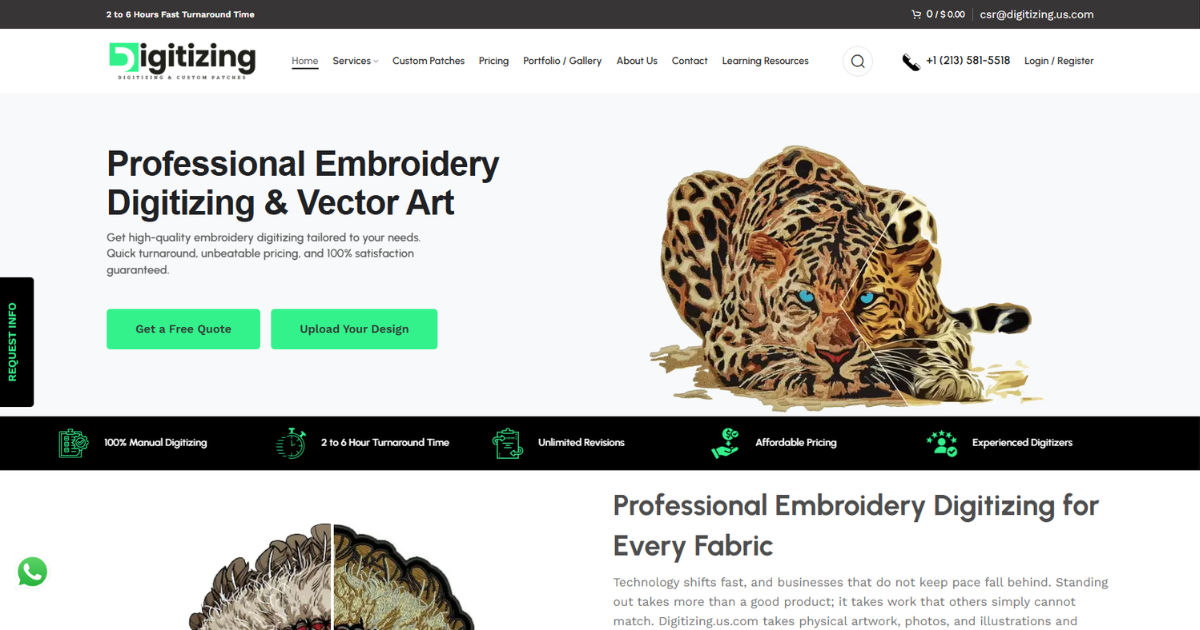 This process is not automatic or simple; it requires skill, software knowledge, and deep understanding of fabric behavior. That is why professional Custom Embroidery Services are widely used by businesses, fashion brands, and promotional companies.
This guide explains every stage of embroidery logo digitization in detail so you can understand how a flat design becomes a stitched reality through Custom Embroidery Services.
Understanding Embroidery Logo Digitization
Embroidery logo digitization is the process of converting artwork into a digital stitch file that embroidery machines can read. It is not the same as simple image conversion. Instead, it involves planning stitch types, directions, density, and layering.
In Custom Embroidery Services, digitizers carefully analyze every part of a logo before turning it into stitches. A logo with gradients, shadows, or small text must be simplified so it can be stitched cleanly on fabric. Without proper digitization, even the best design will look messy when embroidered.
This is why professional Custom Embroidery Services invest in trained digitizers who understand both design and textile behavior. The goal is to ensure the final embroidery looks sharp, balanced, and durable.
Step 1: Receiving and Analyzing Artwork
The first stage in digitization is receiving the artwork file. This can be a PNG, JPEG, PDF, or vector file. The digitizer studies the design carefully to understand its complexity.
At this stage, Custom Embroidery Services evaluate:
- Logo size
- Color count
- Fine details
- Text readability
- Fabric type it will be stitched on
A detailed logo may require simplification. For example, tiny text may need to be enlarged or removed. In Custom Embroidery Services, this step is crucial because it determines how well the final embroidery will perform.
Many beginners think digitization is just “tracing,” but professional Custom Embroidery Services know it is more like engineering than drawing. Every decision affects the final stitch quality.
Step 2: Choosing Stitch Types
After analyzing the artwork, the digitizer selects stitch types. This is one of the most important parts of the process.
Common stitch types include:
- Satin stitch for borders and text
- Fill stitch for large areas
- Running stitch for outlines and details
In Custom Embroidery Services, stitch selection is based on design shape and fabric behavior. Satin stitches are used for smooth edges, while fill stitches cover larger surfaces.
Choosing the wrong stitch type can distort the design. That is why experienced Custom Embroidery Services carefully test combinations before finalizing the file.
Different fabrics also affect stitch choice. For example, caps require tighter stitching, while t-shirts allow more flexibility in Custom Embroidery Services.
Step 3: Setting Stitch Direction and Flow
Stitch direction controls how threads are laid on fabric. It affects texture, shine, and durability.
In Custom Embroidery Services, digitizers plan stitch angles to:
- Improve design appearance
- Reduce fabric puckering
- Strengthen embroidery structure
For example, diagonal stitches may be used to create smooth shading effects. If stitch direction is wrong, the logo may look uneven or stretched.
That is why professional Custom Embroidery Services spend time adjusting every angle. This step ensures the embroidery has a natural flow and professional finish.
Even small changes in direction can dramatically improve the quality of work in Custom Embroidery Services.
Step 4: Adjusting Stitch Density
Stitch density refers to how close stitches are placed together. It directly affects the weight and texture of embroidery.
In Custom Embroidery Services, density must be carefully balanced:
- Too high: fabric becomes stiff and may tear
- Too low: design looks weak and unfinished
Digitizers adjust density depending on fabric type. Thick fabrics like denim can handle higher density, while soft fabrics require lighter stitching.
Proper density control is one of the most technical skills in Custom Embroidery Services. It ensures that logos remain durable after washing and daily use.
Without correct density, even a well-designed logo can fail in production through Custom Embroidery Services.
Step 5: Underlay Stitching Preparation
Underlay is the hidden foundation stitches placed before the main design. It stabilizes fabric and supports the top stitches.
In Custom Embroidery Services, underlay is essential for preventing:
- Fabric shifting
- Design sinking
- Uneven embroidery
Different underlay types include edge walk, zig-zag, and fill underlay. Each serves a specific purpose depending on the design.
Professional Custom Embroidery Services always customize underlay settings for each project. This step may not be visible, but it plays a huge role in quality.
Without proper underlay, embroidery may look distorted even if the design file is correct in Custom Embroidery Services.
Step 6: Color Mapping and Thread Matching
Color mapping is the process of assigning thread colors to design elements. Since digital screens use RGB colors and embroidery uses physical threads, matching is important.
In Custom Embroidery Services, digitizers match colors using thread charts from brands like Madeira or Isacord.
This step includes:
- Converting digital colors to thread codes
- Ensuring brand consistency
- Adjusting shades for fabric type
Accurate color mapping ensures that logos look consistent across all products. That is why Custom Embroidery Services often maintain detailed thread libraries for accuracy.
A small color mismatch can change brand identity, so precision is essential in Custom Embroidery Services.
Step 7: Converting File Formats
Once the design is digitized, it is converted into machine-readable formats like DST, PES, EXP, or JEF.
In Custom Embroidery Services, file conversion must be error-free. Each embroidery machine understands specific formats, so compatibility is important.
Before final delivery, digitizers test the file using simulation software to check:
- Stitch sequence
- Thread breaks
- Design alignment
This ensures that production runs smoothly in Custom Embroidery Services without machine errors or thread issues.
File conversion may seem technical, but it is a key part of professional Custom Embroidery Services workflow.
Step 8: Test Stitching and Sample Creation
Before mass production, a sample is stitched on actual fabric. This step reveals real-world performance of the digitized file.
In Custom Embroidery Services, test stitching helps identify:
- Thread tension issues
- Fabric puckering
- Design misalignment
If problems appear, the digitizer goes back and adjusts the file. This cycle continues until the design is perfect.
High-quality Custom Embroidery Services never skip sampling because it ensures customer satisfaction and reduces production errors.
Testing is the final safety step before full production in Custom Embroidery Services.
Step 9: Final Adjustments and Optimization
After testing, final refinements are made. This includes minor stitch adjustments, color corrections, and density optimization.
In Custom Embroidery Services, optimization ensures:
- Faster machine running time
- Reduced thread breakage
- Clean final appearance
Digitizers also prepare multiple sizes of the same design for different product types.
This flexibility is a key advantage of professional Custom Embroidery Services, especially for brands that need consistent logos across uniforms, caps, and bags.
Step 10: Common Mistakes in Digitization
Even experienced digitizers can make mistakes. Some common issues include:
- Overcomplicating designs
- Ignoring fabric stretch
- Incorrect stitch direction
- Poor density control
In Custom Embroidery Services, avoiding these mistakes is critical for production quality.
A poorly digitized file can waste time, material, and money. That is why skilled professionals in Custom Embroidery Services follow strict quality guidelines.
Learning from mistakes is part of improving efficiency in Custom Embroidery Services.
Importance of Professional Digitization
Professional digitization is the backbone of embroidery production. Without it, machines cannot produce accurate designs.
In Custom Embroidery Services, digitization ensures:
- Brand consistency
- High-quality stitching
- Long-lasting embroidery
- Efficient production workflow
Businesses rely on Custom Embroidery Services because they guarantee precision and reliability. Whether it is corporate uniforms or fashion apparel, digitization defines the final product quality.
This makes Custom Embroidery Services essential in modern textile industries.
Real-World Applications
Embroidery digitization is used in many industries:
- Corporate branding
- Sports uniforms
- Fashion clothing
- Promotional products
All of these rely on Custom Embroidery Services for consistent logo reproduction.
Without digitization, mass production would not be possible at a professional level. That is why global brands invest heavily in Custom Embroidery Services to maintain identity across products.
Even small businesses benefit from affordable Custom Embroidery Services for branding purposes.
Future of Embroidery Digitization
Technology is improving embroidery digitization through AI tools and automation. However, human skill is still essential.
In Custom Embroidery Services, future improvements may include:
- Faster software processing
- Smart stitch prediction
- Automated optimization tools
Still, creative decision-making will always be part of Custom Embroidery Services because fabric behavior cannot be fully automated.
The combination of human expertise and technology will shape the future of Custom Embroidery Services.
Conclusion
Embroidery logo digitization is a detailed and technical process that transforms artwork into stitch-ready files. Every stage—from artwork analysis to final testing—plays a critical role in ensuring quality output.
Professional Custom Embroidery Services depend on this process to deliver accurate, durable, and visually appealing embroidery. Without digitization, embroidery machines would not know how to interpret designs correctly. That is why every step must be handled with care in Custom Embroidery Services.
From stitch selection and density control to color mapping and testing, each stage contributes to the final product. Businesses trust Custom Embroidery Services because they ensure consistency and brand identity across all embroidered products.
As technology evolves, Custom Embroidery Services will continue improving, but human expertise will always remain at the center of quality embroidery production.
Understanding this process helps you appreciate the skill behind every embroidered logo created through Custom Embroidery Services.