
In today’s digital world, images are everywhere. From social media posts to scanned documents, PNG files are widely used because they maintain high quality and transparency. But what if you need the information inside a PNG image as editable text? That’s where PNG to Text technology comes in. It allows you to extract text from an image, making it easier to work with, search, and edit.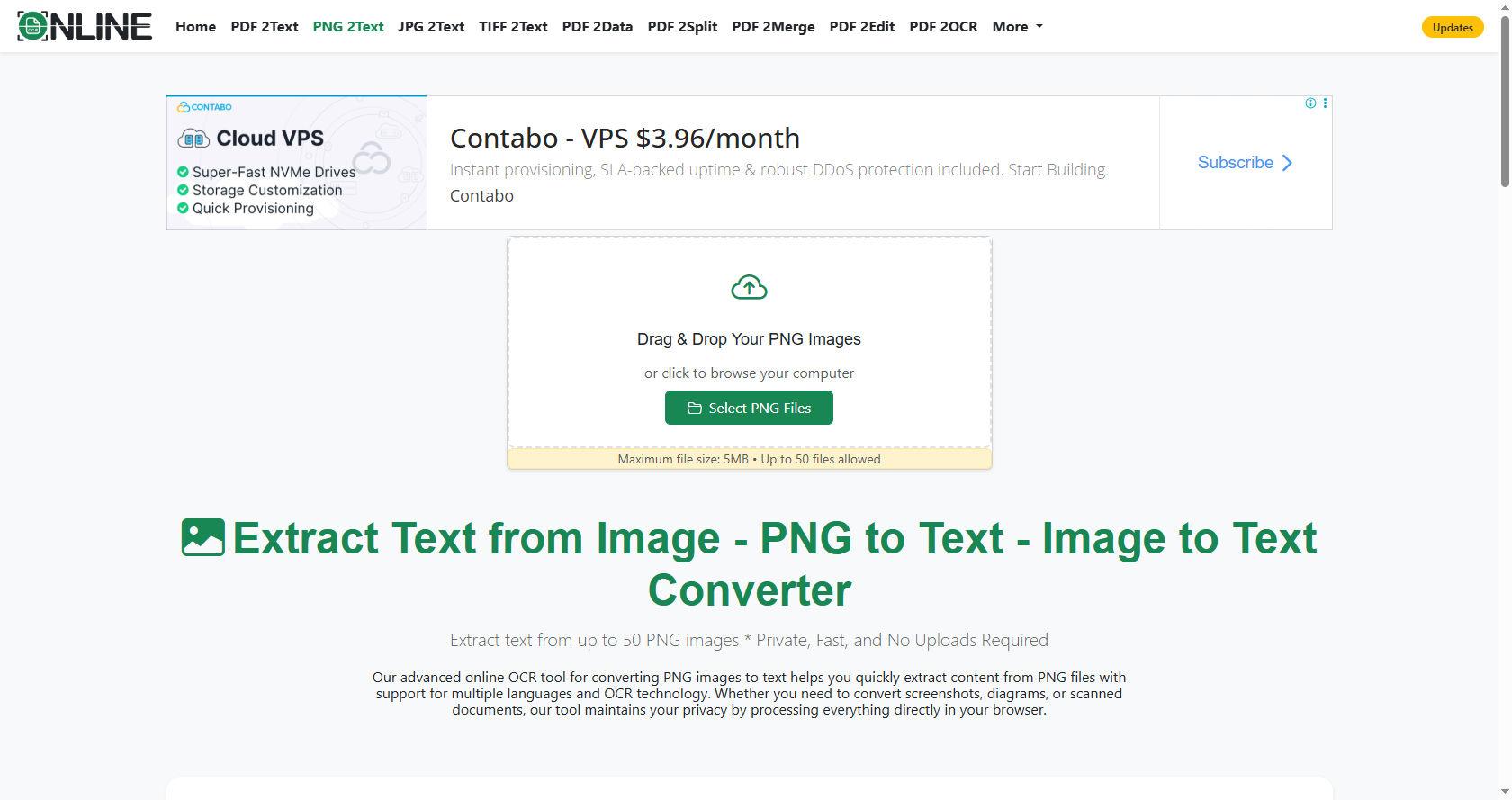
However, simply converting a PNG image to text isn’t enough in a globalized world. With people using multiple languages, PNG to Text with multi-language support has become essential.
Whether it’s translating content, extracting data from international documents, or creating accessible materials, multi-language support in PNG to Text tools opens a world of possibilities.
In this guide, we will explore why multi-language support is crucial for PNG to Text conversions, how it works, the benefits, challenges, and practical applications.
By the end, you will understand why choosing the right tools for PNG to Text with multi-language support can save time, improve productivity, and enhance communication.
What is PNG to Text Conversion?
PNG to Text is a process where software identifies and extracts text embedded in a PNG image. Unlike simple copy-paste, this technology uses Optical Character Recognition (OCR) to read text from images accurately.
PNG files can contain scanned documents, screenshots, charts, or handwritten notes. When text is locked inside an image, it becomes inaccessible for editing, searching, or translating. PNG to Text solves this problem by turning static images into editable text files.
The accuracy of PNG to Text depends on several factors. High-resolution images with clear fonts yield better results. However, modern tools also handle complex layouts, curved text, and different font styles.
How Multi-Language Support Enhances PNG to Text
Imagine you receive a document in Japanese, Arabic, and Spanish. Without multi-language support, PNG to Text tools might only recognize one language, resulting in incomplete or inaccurate conversions. Multi-language support ensures that all text in the PNG image is detected, regardless of the language used.
Recognizing Different Scripts
Different languages use different scripts. English uses Latin characters, Hindi uses Devanagari, Arabic has its unique script, and Chinese uses logograms. Multi-language PNG to Text tools are trained to recognize these diverse scripts accurately.
Handling Right-to-Left Languages
Languages like Arabic, Hebrew, and Urdu are written right-to-left. A simple OCR that supports only left-to-right languages will misinterpret the text, creating errors. Multi-language PNG to Text tools handle text direction, maintaining the correct flow of content.
Supporting Accents and Diacritics
Many languages use accents and diacritics to change pronunciation and meaning. French, Spanish, and Vietnamese, for example, require careful recognition of these marks. A tool with multi-language support ensures that such details are preserved in the extracted text.
Benefits of PNG to Text with Multi-Language Support
The ability to extract text from PNG images in multiple languages offers numerous advantages.
Improved Productivity
Instead of manually typing content from images, multi-language PNG to Text tools automate the process. This is especially useful for businesses, educators, and researchers dealing with documents in different languages.
Enhanced Accessibility
Converting text from images makes content accessible for screen readers and text-to-speech tools. This is critical for visually impaired users or for creating inclusive digital materials.
Simplified Translation
Multi-language PNG to Text allows text from images to be easily copied into translation software. This is invaluable for global organizations needing fast and accurate translations.
Searchable Content
Extracted text can be indexed and searched. Documents that were once locked in images become searchable, making it easier to find specific information.
Reduced Errors
Manual transcription often introduces typos or errors. OCR technology with multi-language support improves accuracy, reducing mistakes in extracted text.
How PNG to Text Multi-Language Tools Work
The technology behind PNG to Text with multi-language support combines OCR, machine learning, and language databases.
Image Preprocessing
Before extraction, the image is preprocessed. This includes enhancing contrast, removing noise, and correcting skewed text. Clean images result in more accurate PNG to Text conversions.
Text Detection
The software identifies areas in the image that contain text. Advanced tools detect text even in complex backgrounds or irregular layouts.
Character Recognition
Each character is analyzed and matched to a language database. Multi-language tools can switch between different character sets depending on the text detected in the image.
Post-Processing
After initial extraction, tools may correct common errors, check spelling, and format the text. Some tools can even recognize tables, bullet points, and other document structures.
Key Features to Look For in PNG to Text Tools
When choosing a PNG to Text tool with multi-language support, consider the following features:
Language Coverage
Check if the tool supports the languages you need. Some tools cover dozens of languages, while others are limited to a few popular ones.
Accuracy
High OCR accuracy is crucial. Test tools with different fonts, sizes, and layouts to ensure reliable results.
Speed
Conversion speed matters, especially if you have large documents or multiple images. Some tools can process batch images efficiently.
Formatting Preservation
Advanced PNG to Text tools preserve formatting, tables, and lists, making the extracted text easier to work with.
Cloud or Offline Options
Cloud-based tools offer convenience and automatic updates, but offline tools are necessary for sensitive documents requiring privacy.
Challenges in PNG to Text Multi-Language Support
While multi-language PNG to Text tools are powerful, they face certain challenges.
Complex Fonts and Handwriting
Unusual fonts, cursive writing, or handwritten notes can reduce OCR accuracy. Some tools are better at printed text than handwritten content.
Low-Quality Images
Blurry, pixelated, or distorted images make text recognition difficult. Preprocessing can help, but results may still vary.
Ambiguous Characters
Some characters look similar across languages, leading to misinterpretation. For example, “o” in Latin script and “о” in Cyrillic may be confused.
Limited Language Resources
Rare languages or dialects may not have enough OCR training data, affecting accuracy.
Practical Applications of PNG to Text with Multi-Language Support
Business and Document Management
Businesses deal with invoices, receipts, contracts, and reports in multiple languages. PNG to Text helps digitize these documents for easier storage, retrieval, and compliance.
Education and Research
Students and researchers can extract text from scanned books, articles, or lecture slides in different languages, simplifying the study process.
Translation Services
Translation agencies benefit from multi-language PNG to Text by quickly converting image-based content into editable text ready for translation.
Government and Legal
Legal documents often exist as scanned images. Multi-language PNG to Text ensures accurate extraction, aiding in document analysis, translation, and archiving.
Accessibility
Converting image text to editable form allows screen readers to interpret content for visually impaired users, promoting digital inclusivity.
Choosing the Right PNG to Text Tool
Selecting the best PNG to Text tool requires careful consideration. Look for tools that offer:
-
High accuracy for multiple languages
-
Support for right-to-left and left-to-right text
-
Table and formatting preservation
-
Batch processing for large workloads
-
User-friendly interface
Some popular tools provide AI-powered recognition for enhanced results. Testing a few options before committing can help find the tool that fits your needs.
Tips to Improve PNG to Text Conversion
Use High-Quality Images
Clear, high-resolution images reduce errors and improve accuracy. Avoid blurry or compressed PNGs.
Optimize Text Contrast
Ensure text stands out from the background. Dark text on a light background yields the best results.
Split Complex Documents
Large images with multiple sections may benefit from splitting before conversion. This allows for better text recognition.
Review Extracted Text
Even the best tools may make minor mistakes. Always proofread the extracted text, especially for critical documents.
Leverage Language Settings
If your tool allows specifying languages, set them correctly. This improves recognition for multi-language documents.
Future of PNG to Text Multi-Language Support
The future of PNG to Text lies in artificial intelligence and deep learning. New models are being trained to recognize more languages, handle handwriting, and preserve complex formatting.
We can expect tools to offer:
-
Real-time OCR on mobile devices
-
Enhanced recognition for rare scripts and dialects
-
Integration with translation and accessibility platforms
-
Smarter post-processing that automatically corrects errors
These advancements will make PNG to Text multi-language support more reliable, efficient, and user-friendly.
Conclusion
In a world where information is shared visually and across languages, PNG to Text with multi-language support is more than a convenience—it’s a necessity. It enables productivity, accessibility, translation, and data management in ways that manual transcription cannot match.
Choosing the right tool and understanding its features can make a huge difference. High-quality images, proper preprocessing, and multi-language support ensure accurate extraction, while AI and OCR technology continue to improve efficiency and precision.
Whether you are a student, researcher, business professional, or developer, leveraging PNG to Text with multi-language support will streamline your work, make content accessible, and save valuable time.
By embracing this technology today, you are not just converting images into text—you are unlocking the potential of your documents for a global audience.